
The Missing Piece for AI in Insurance Has Finally Been Solved
Enable AI to understand, analyze, and act on real system behavior
QMT Oracle:
The Digital System Blueprint for Insurance Platforms
Insurance carries and Insurtechs are investing heavily in AI, yet many initiatives struggle to deliver meaningful results.
The reason is simple: AI cannot reason about systems it does not understand.
Today’s insurance platforms are complex, fragmented, and often poorly documented. Workflows span multiple systems, business logic is embedded in code and configurations, and critical dependencies are hidden.
Without a structured understanding of how the system actually behaves, AI remains limited, making it difficult for carriers to reliably accelerate change.

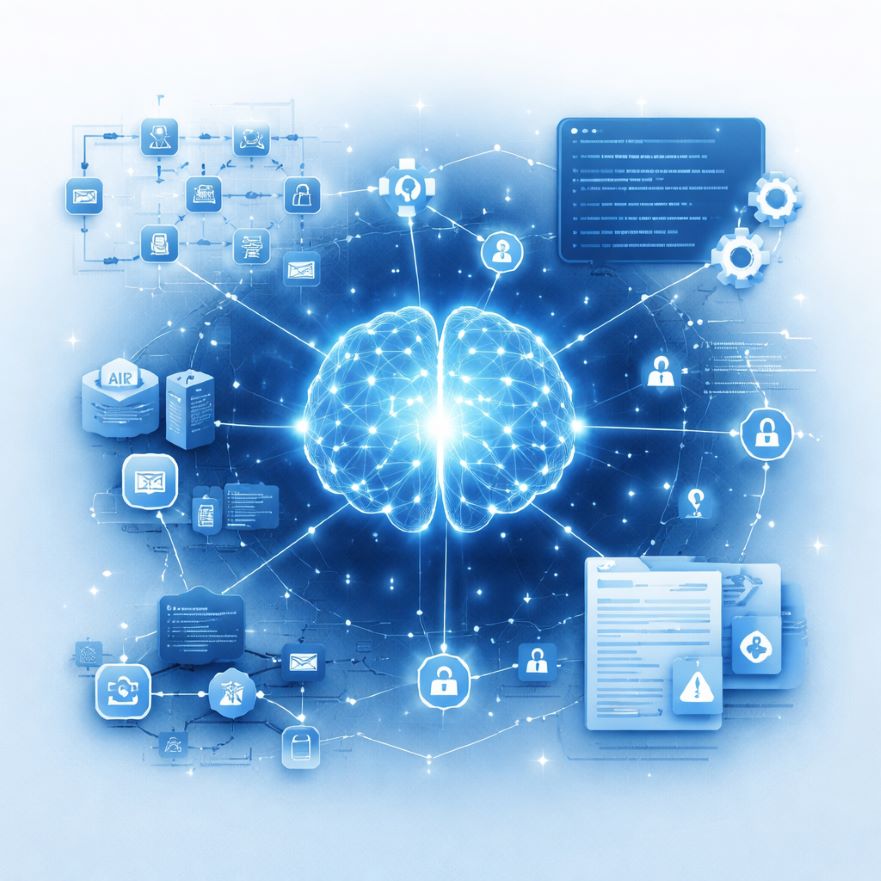
AI Cannot Understand Your System
Most enterprise systems were never designed to be understood holistically.
- Workflows span multiple systems
- Business rules live in code and configuration
- Integrations introduce hidden dependencies
- Documentation rarely reflects real behavior
- Changes introduce unintended consequences
As a result, organizations struggle to:
- Predict the impact of change
- Validate system behavior
- Provide meaningful context to AI
Introducing the
Digital System Blueprint
Emtech has developed a way to automatically generate a structured model of how complex insurance systems behave.
Using QMT Oracle, we create a living digital blueprint that captures:
- End-to-end workflows
- Decision logic and business rules
- Data flows and transformations
- Document generation including PDFs and XML
- System integrations and dependencies
This is not static documentation.
It is a dynamic, machine-readable representation of the system.

What the Digital Blueprint Enables
Once the blueprint exists, it unlocks a new category of capabilities.
AI Enablement
• Provide structured context for AI to reason about system behavior
• Enable use cases such as: root cause analysis, requirements gap detection, intelligent test generation, system knowledge assistants
• Support faster and more predictable delivery of system changes, enabling accelerated product innovation cycles
Full Regression Coverage
• Virtually compare system models between production and new releases
• Enable 100% regression coverage without being constrained by hardware or execution bottlenecks
System Transparency
Understand end-to-end behavior across systems
Change Impact Analysis
Know what changes will affect before deployment
Dependency Visibility
Reveal hidden system relationships
Document & Data Validation
Validate PDFs and XML outputs
Dynamic Knowledge Base
The blueprint becomes the source of truth for system knowledge.
Enterprise Intelligence Beyond Testing
The Digital Blueprint delivers value far beyond testing. Built from deterministic system behavior rather than assumptions or AI inference, it becomes a trusted source of truth that organizations can use to create, analyse, and act with confidence.
With one blueprint, organizations can unlock:
- User and training documentation
- Business process maps and workflow narratives
- Change impact and release readiness assessments
- Business rule and configuration validation
- Knowledge transfer and onboarding materials
- Requirements traceability and gap analysis
- Production support and troubleshooting guides
- AI-ready knowledge repositories and context models
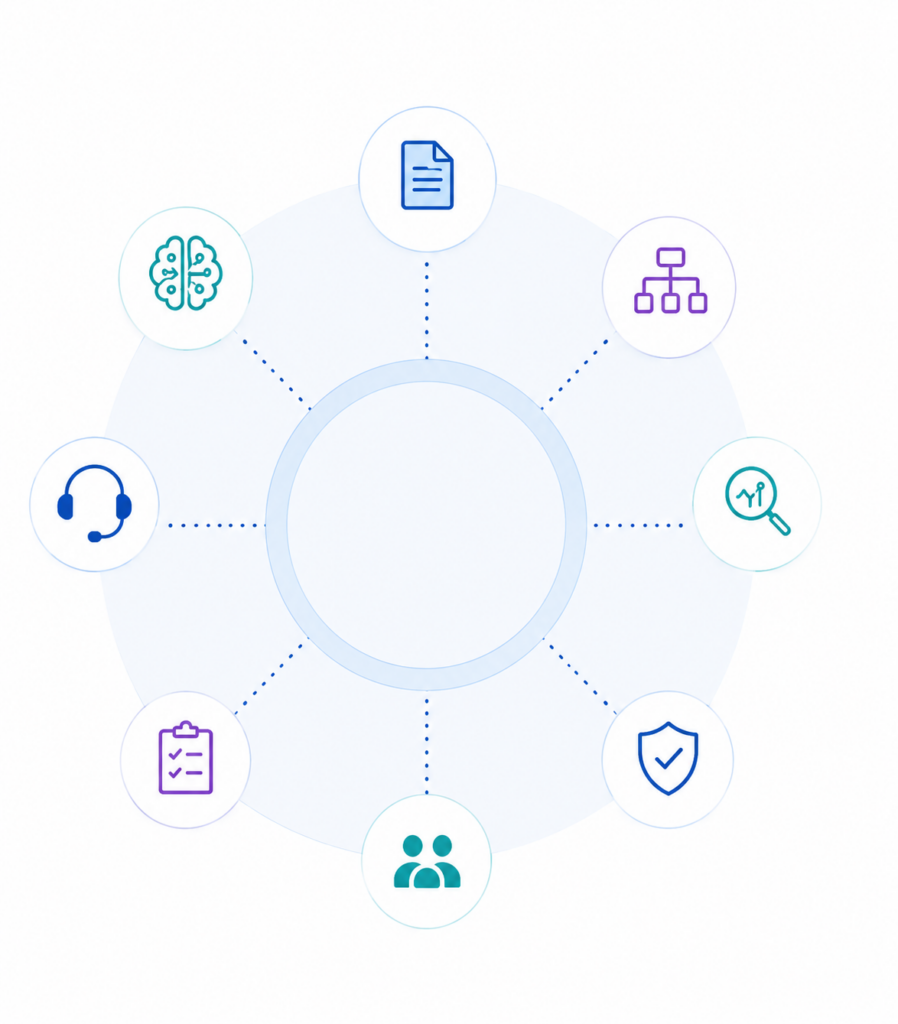

A Live Model of System Behavior
At the core of the Digital Blueprint is a live visual representation of the system.
Teams can explore:
- Workflows
- Decision paths
- Integrations
- Dependencies
The model becomes a navigable map of the platform, enabling engineers and architects to understand behavior across the entire system.
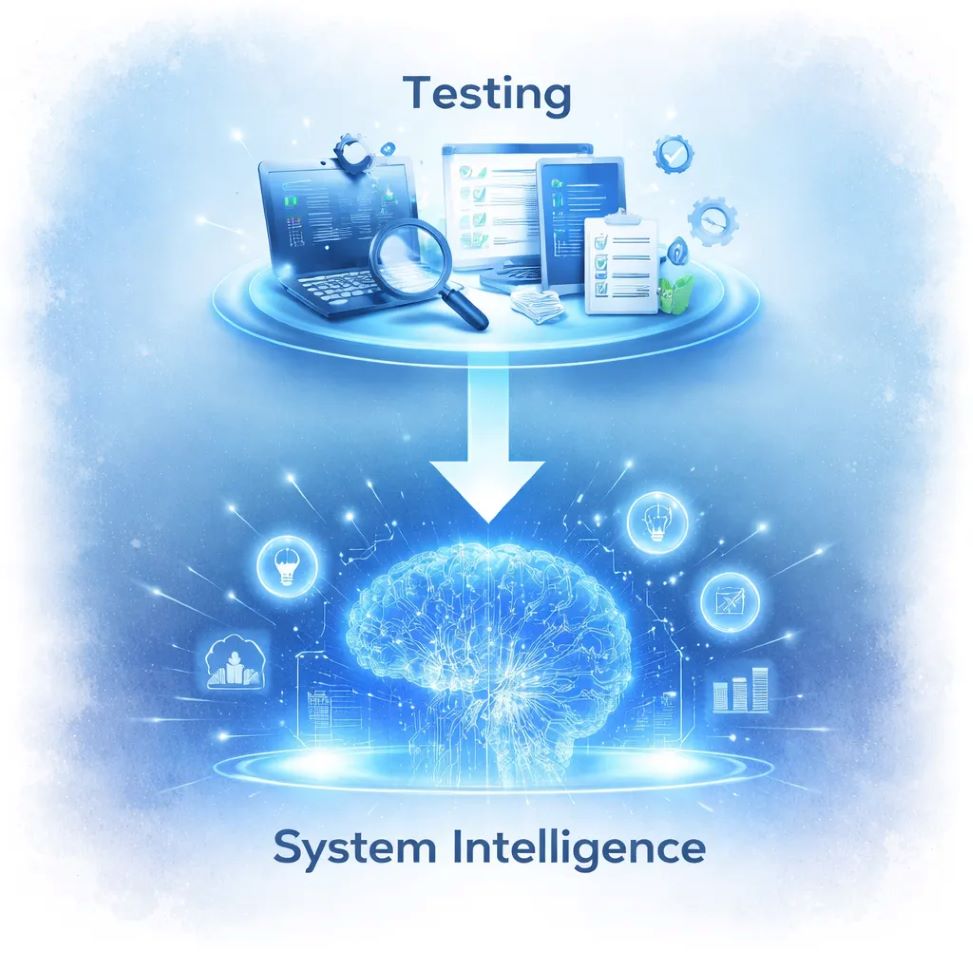
From Testing to System Intelligence
Autonomous testing is where this begins, but it is not where it ends. It’s a natural evolution of the foundation we’ve already built.
QMT Oracle uses the digital blueprint to enable:
- Autonomous software testing
- Continuous validation of system behavior
- Virtual regression testing at scale
But beyond testing, the blueprint becomes the foundation for a new capability:
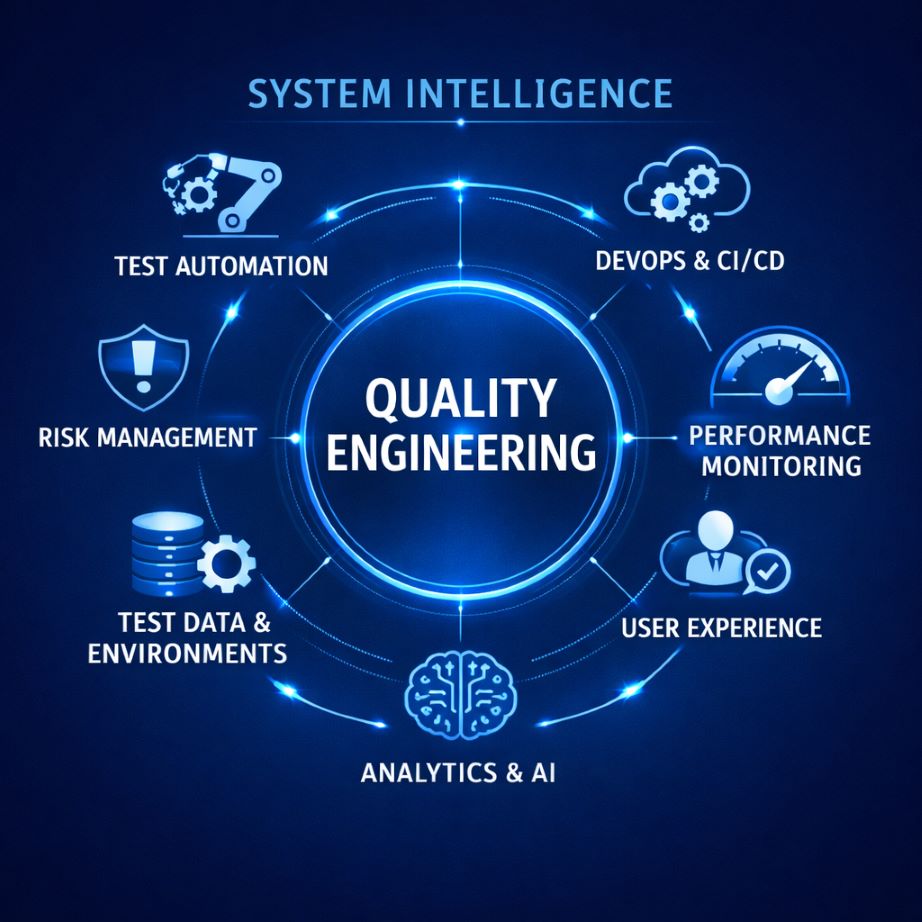
System Intelligence
A layer where:
- AI runs on top of the system model
- Risk analysis is driven by real behavior
- Change decisions are informed by actual dependencies
Quality Engineering as a Natural Custodian
Because the Digital Blueprint is generated through QMT’s Autonomous Model Generator (AMG), many organizations are finding that Quality Engineering is naturally positioned to take ownership of it.
Across customer engagements, a consistent pattern is emerging:
- Custodians of the system model
- Stewards of system intelligence
- Key enablers of AI adoption across the organization
This is not a prescribed model, but an emerging pattern we are observing as organizations begin to operationalize system intelligence.
Powered by QMT
QMT is the platform that makes the Digital Blueprint possible.
It combines three core capabilities:
Autonomous Model Generation
Automatically builds a structured system model.
Continuous System Validation
Ensures system behavior remains consistent across releases.
Advanced Output Validation
TruePDF and TrueXML validate complex system outputs.
All capabilities are built on a graph-based representation of system behavior.
The Business Impact
Carriers using the Digital Blueprint achieve:
- Faster change impact analysis
- Maximum regression coverage
- Reduced operational incidents
- Faster AI adoption
- Accelerated onboarding
- Improved compliance confidence
The result is not just better visibility into systems, but the ability to transform and innovate at a pace that aligns with modern insurance market demands.

See Your System Blueprint
If you would like to see how QMT Oracle works on a real system, we would be happy to walk you through it.
We can:
- Show a live Digital Blueprint
- Explore system behavior and dependencies
- Demonstrate insights derived from the model
Discover how your organization can move from fragmented systems to true system intelligence.